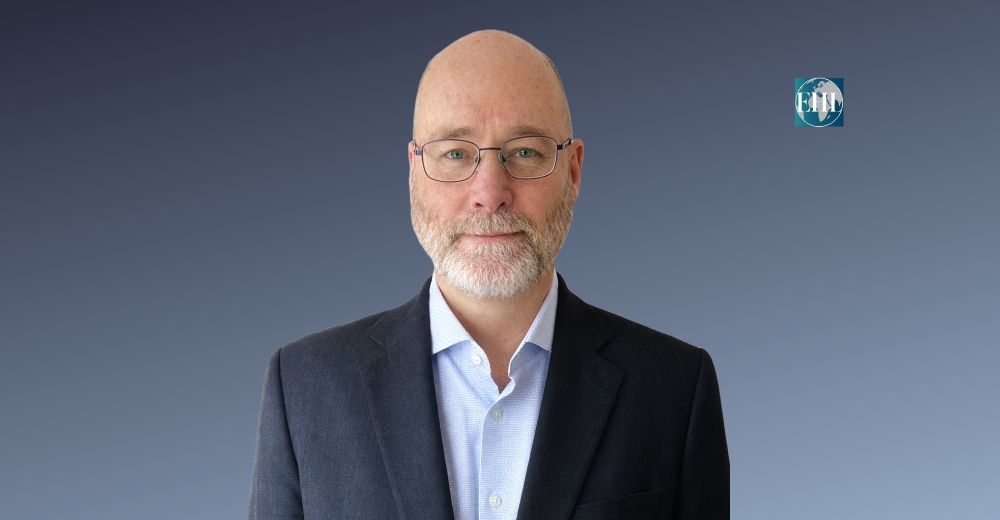
Clive Michelsen, Chairman and CEO of My-E-Health, is reshaping how healthcare reaches people around the world. Inspired by personal experience with mental health challenges in his family, he has spent more than 25 years developing tools that make care timely, accessible, and effective. What began as a workplace assessment platform has grown into a medically registered system that uses AI to support patients and healthcare workers alike.
My-E-Health focuses on combining human insight with technology, creating solutions that identify risk early and guide people to the right support. From mental health to workforce wellbeing, the platform is designed to be safe, reliable, and always available. Clive Michelsen believes technology should support care, not replace it, allowing clinicians to focus on the most complex cases.
Through innovation, evidence, and empathy, Clive Michelsen is proving that AI can make healthcare proactive, human, and globally accessible.
Let’s delve into the interview details below!
Could you share the journey that led you to founding My-E-Health and what inspired you to focus on AI-driven solutions in global healthcare?
My brother lived with PTSD, anxiety, and bipolar disorder, and losing him made one thing painfully clear: when support is delayed, outcomes can change. I originally built a workplace assessment tool to measure the human side of organisational change. Over 25 years, it evolved—through constant iteration—into a medically registered product. In mental health, waiting lists can be as long as three months; AI became our way to extend support beyond the clinic—early, proactively, and 24/7.
How would you describe My-E-Health’s mission in transforming healthcare globally, and what core values drive your innovation strategy?
We exist to deliver affordable, proactive care—accessible to all, anywhere and anytime. Healthcare is expanding fast, and the AI revolution is only beginning. Our innovation is guided by dignity, safety, and usefulness: tools that people can access, trust, and use. We’re trying to bring back “bedside manner” with modern technology—care that feels human, even when it’s delivered digitally.
What unique challenges and opportunities have you encountered in implementing AI solutions, and how has My-E-Health addressed them?
We learned early that “AI” is only as good as its guardrails. We started in a test environment, boxed inside our psychometric ecosystem where rules and guidelines already existed. Hallucinations and data management were real challenges, so we moved to controlled workflows: multiple specialised agents, structured portfolios, orchestration, and quality assurance gates. Once governance is in place, the opportunity becomes enormous—especially for prevention and always-available support.
Could you share some examples of how your technology has improved patient outcomes or healthcare accessibility worldwide?
In psycho-oncology, My-E-Health has been evaluated as an AI-driven first-line triage model: routine screening stratifies patients into low, moderate, or high risk, with AI-guided self-management for lower tiers and rapid escalation for high-risk cases. In a four-week feasibility study, the blended arm (AI plus human coaching) produced a large, clinically meaningful drop in distress, alongside strong engagement with AI coaching (79% usage).
In workforce mental health, a controlled trial showed that web-based psychotherapy within the My-E-Health ecosystem significantly reduced burnout risk versus controls—evidence that you can intervene early and remotely while still measuring change rigorously.
In a larger Scandinavian cohort of healthcare workers, early risk identification followed by either therapy or AI-supported intervention was associated with substantial reductions in burnout, anxiety, and depression risk—showing how digital triage can protect the people delivering care, not just those receiving it.
As Chairman and CEO, how do you foster a culture of innovation within your team while navigating the complexities of global healthcare markets?
You have to believe in what you’re building. When the team sees real human impact, it’s easier to keep pushing through regulation, procurement, and clinical constraints. It’s not about the money—it’s about innovation and helping others. We innovate in disciplined cycles—test, measure, refine—so “new” never becomes “unsafe.” And we keep it collaborative: clinicians, researchers, security, product, and AI governance in the same room. It’s hard work, but it’s also genuinely fun.
Reflecting on your journey so far, what have been the most pivotal lessons, both successes and setbacks, that have shaped My-E-Health’s growth?
Combining biometric with psychometric data proved to be a huge pivot, as the approach and treatment solution provided detailed context and reach not previously available. Security assurance was also a turning point. We recorded roughly 1,230,000 attempts to break into our backend—because attackers probe standard ports and predictable setups. We changed to non-standard ports and rotated server IPs every three months, and the attacks dropped to zero after those procedures. That lesson shaped everything: in healthcare, trust is earned through engineering detail.
Looking ahead, how do you envision AI transforming global healthcare over the next 5 to 10 years, and what role will My-E-Health play in this evolution?
AI will move healthcare from episodic care to continuous care. Combine wearables, validated psychometrics, and safe AI, and you can spot early deviation, flag risk, and route people into stepped support—self-management, AI-guided programmes, blended coaching, and rapid referral when needed. For preventive care, AI can take a meaningful share of first-line support and free clinicians for complex cases. It can also help clinicians with structured summaries and scribing, and surface potential conflicts in treatment and care. My-E-Health aims to be the trusted “continuum layer” that extends care beyond the clinic—while keeping human oversight where it matters.
What advice would you offer to aspiring entrepreneurs and innovators who want to create meaningful change at the intersection of technology and healthcare?
Expect a long road. Don’t take shortcuts—especially on evidence, privacy, and security. Keep innovating but build with clinicians and measure outcomes so your product earns trust. Design for access, not hype, and remember who you’re serving. And when it gets difficult (because it will), never give up.