Prime Highlights:
- A simple at-home finger-prick blood test can detect Alzheimer’s disease early, even before severe symptoms appear.
- The test shows 86% accuracy, similar to traditional blood and spinal fluid tests.
Key Facts:
- The study involved 337 participants across seven European countries, including people with mild cognitive issues, dementia, and adults with Down syndrome.
- Alzheimer’s currently affects around 7 million people in Europe, with cases expected to double by 2030.
Background:
A new fingertip blood test could soon make it easier to detect Alzheimer’s disease early, according to a Europe-wide study. The test, which is not yet ready for clinical use, has the potential to identify the disease before serious symptoms develop.
The study was led by Banner Health from the United States in partnership with the University of Exeter. It involved 337 people at seven research centers across Denmark, Italy, Spain, Sweden, and the UK. Participants included people with no memory problems, mild cognitive issues, dementia, and adults with Down syndrome, who are at higher risk of developing Alzheimer’s.
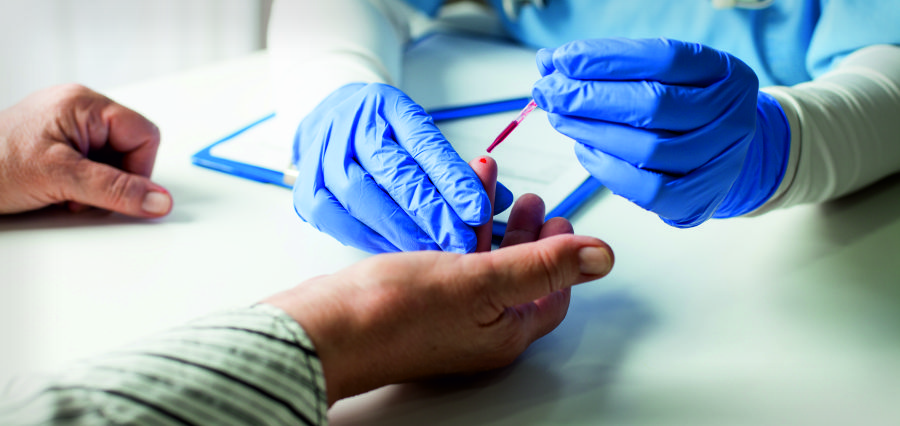
Researchers collected a few drops of blood from each person’s fingertip, which were dried on a special card. These samples were compared with standard blood tests and spinal fluid tests. Published in Nature Medicine, the study showed that the finger-prick test could detect signs of Alzheimer’s with 86% accuracy, similar to conventional methods.
The test measures three important proteins linked to Alzheimer’s: p-tau217, which is used to diagnose the disease; GFAP, which signals brain inflammation; and NfL, which reflects nerve cell damage.
Nicholas Ashton, senior director of Banner’s Fluid Biomarker Program and the lead researcher, said the test could change Alzheimer’s research by showing that the same markers used in hospitals can now be measured from a simple home-collected blood sample.
Anne Corbett, a dementia researcher at the University of Exeter, added that although the test is still years from clinical use, it could allow researchers to study more people from different backgrounds and conduct larger screenings.
Alzheimer’s currently affects around 7 million people in Europe, with numbers expected to double by 2030. Traditional tests like brain scans and spinal fluid checks are expensive and not widely available. This new finger-prick test could make early detection simpler and more accessible to many more people.