Prime Highlights:
- Doctors are developing the AquaWomb, an artificial womb that could help extremely premature babies survive and grow safely.
- Just four extra weeks of developmentin the artificial womb can greatly improve survival rates and reduce long-term health problems.
Key Facts:
- Around 6,400 newborns die every dayworldwide due to complications from premature birth, according to the WHO.
- The AquaWomb is being developed in the Netherlandsby neonatologists at Radboud University Nijmegen Medical Centre.
Background:
Doctors are working on an artificial womb to help babies born very early survive. The device acts like a mother’s womb, letting the baby grow and lowering the chance of health problems later.
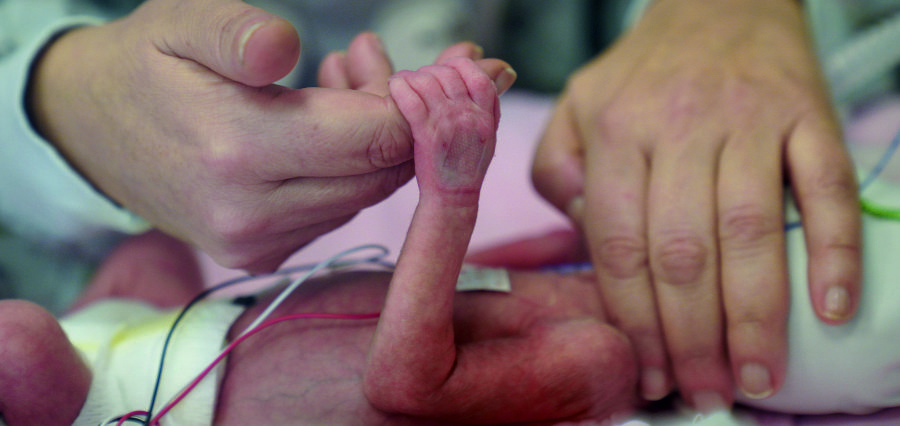
Premature birth is a leading cause of newborn deaths. The World Health Organization (WHO) says about 6,400 babies die every day, making up almost half of all deaths of children under five. In Europe, around 500,000 babies are born too early each year and face serious health risks because their bodies are not fully developed.
The device, called AquaWomb, is being developed by neonatologists at Radboud University Nijmegen Medical Centre in the Netherlands. Essentially a sealed bag filled with heated artificial amniotic fluid, it supports babies born between 24 and 28 weeks of pregnancy, a period when survival is possible, but complications are high. The infant is connected to an artificial placenta that supplies oxygen and essential nutrients, mimicking natural fetal development.
“Our goal is to preserve fetal physiology and circulation, allowing the baby to develop for a few more weeks,” said Myrthe van der Ven, co-founder of AquaWomb. Studies show that just four more weeks of development can greatly improve a premature baby’s chances of survival and lower the risk of long-term health problems.
An important part of the process is delivering the baby by caesarean section and placing it directly into the artificial womb. This keeps the baby from breathing air too soon, which can harm its fragile lungs. “The most critical step is connecting the baby to the artificial placenta within minutes, as the mother’s placenta no longer functions after birth,” explained van der Ven.
Similar projects are underway in the United States and Canada, reflecting a global effort to transform neonatal care. Although the AquaWomb is still being developed, experts say it could be an important step in helping premature babies survive and stay healthy in the long term.