Imagine waking up feeling unwell on a wet Tuesday morning. The clinic is twenty minutes away. The waiting room will be full. You have work, children, or simply no easy way to get there. So you do what many people do: you wait, hope it passes, and put off getting help until you really cannot anymore.
That scenario plays out millions of times every week across the world. And it is one of the most quietly damaging patterns in modern healthcare. Not every health concern is an emergency, but every concern deserves timely attention. This is precisely the gap that modern healthcare innovation exists to bridge, bringing care to people wherever they are, whenever they need it.
This blog discusses how telehealth technology works, where it came from, what are the benefits of telehealth for patients and providers, and which organisations are leading the way.
What Telehealth Technology Actually Is
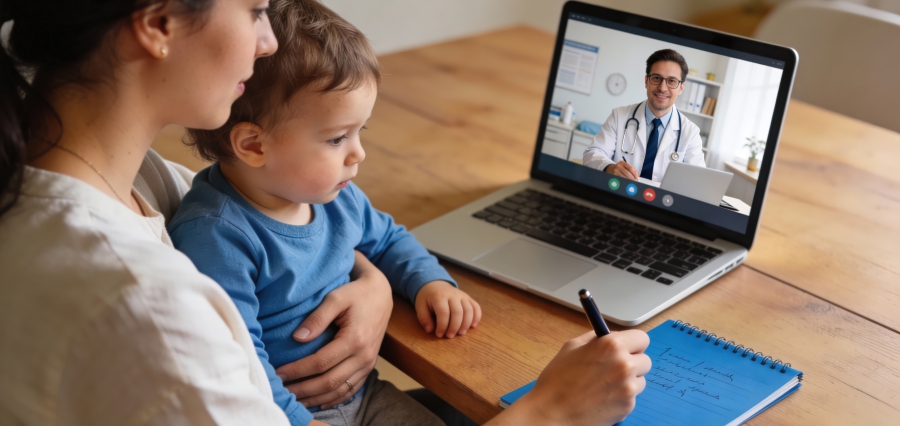
Telehealth technology is the use of digital tools to deliver healthcare remotely. This includes video consultations with a GP or specialist, remote monitoring of chronic conditions through connected devices, mobile health apps, AI-powered symptom checkers, and secure messaging between patients and healthcare teams.
The idea is straightforward. Healthcare does not always require a physical examination. A significant portion of consultations, follow-up appointments, prescription renewals, mental health sessions, and general advice can happen just as effectively through a screen. Digital tools make that possible at scale.
Before, During, and After the Pandemic
Telehealth technology existed well before COVID-19, but it lived largely on the edges of mainstream healthcare. A small number of providers offered video appointments. Remote monitoring tools existed but were rarely used broadly. Most patients and practitioners simply defaulted to in-person care because that was the established norm.
Then the pandemic arrived and changed everything almost overnight. With clinics closed or operating at reduced capacity, and with vulnerable patients unable to safely travel for routine care, healthcare systems across Europe and beyond had no choice but to adopt remote care at speed. What had taken years to implement in small pockets happened in weeks across entire health systems.
The NHS in the UK, for example, went from a small fraction of consultations happening remotely to the vast majority within the space of a few months. Similar shifts happened across Germany, France, the Netherlands, and Scandinavia.
After the pandemic, usage did not fall back to pre-2020 levels. Patients had experienced the convenience and accessibility of remote care. Clinicians had seen it work. Remote healthcare had crossed from niche to mainstream, and it stayed there.
What Are the Benefits of Telehealth for Patients
When people ask what are the benefits of telehealth, the most immediate answer is access. Geography has always been one of healthcare’s most stubborn barriers. A patient living in a rural area of Scotland, a remote region of Scandinavia, or a small town in Southern Europe has historically had far less access to specialist care than someone living in a city. Telehealth technology changes that equation significantly.
Beyond geography, what are the benefits of telehealth for everyday patients include reduced waiting times, fewer missed appointments, lower travel costs, and the ability to fit care around work and family life rather than the other way around. For patients managing long-term conditions like diabetes, heart disease, or respiratory illness, remote monitoring tools mean their healthcare team can track their health data in real time without requiring frequent trips to a clinic.
Mental health care has been one of the strongest areas of growth. Therapy and counselling translate well to video, and removing the barrier of travel and waiting rooms has helped many people access support they might otherwise have delayed or avoided entirely.
What Are the Benefits of Telehealth for Healthcare Systems
The advantages go well beyond individual patients. Remote care helps reduce pressure on physical infrastructure, saves clinician time, and makes scheduling far more manageable.
Clinics that have adopted telehealth technology have reported a decreased number of no-shows, lower administrative costs, and more efficient use of specialist time. When a consultant in London can see a patient in Cornwall via video rather than requiring that patient to travel for hours, both parties benefit, and the wider system runs more smoothly.
What are the benefits of telehealth at a system level also includes better data. Remote monitoring generates continuous health data that supports earlier intervention, better chronic disease management, and more informed clinical decisions.
The Players Shaping the Space
Several organisations are driving telehealth technology forward in meaningful ways.
Teladoc Health provides services worldwide across primary care, mental health, and chronic disease management. It is one of the largest platforms in the world by number of users.
Babylon Health, founded in the UK, built an AI-powered platform combining symptom checking with virtual consultations. It has been carried out in many different countries, thus delivering medical care to the people who do not have sufficient access to regular medical services.
The Doximity service in America is dedicated to connecting doctors and providing online treatment through a special website that is popular among doctors.
There is the NHS app in the United Kingdom, which includes telehealth capabilities and allows patients to arrange appointments, check their medical records, and communicate with doctors remotely via one platform.
In Europe, such programs as remote care have been implemented in Sweden, Denmark, and the Netherlands as well.
Conclusion: Healthcare That Comes to You
Telehealth technology will not replace every aspect of in-person care, nor should it. Some conditions require physical examination, procedures that need specialist equipment, and situations where nothing substitutes for a clinician in the room. But for a significant and growing portion of healthcare interactions, the platform offers something genuinely valuable: access, convenience, and continuity of care without the barriers that have always made healthcare harder than it needed to be. The doctor can now see you from wherever you are. That is not a small thing.